Sculptures
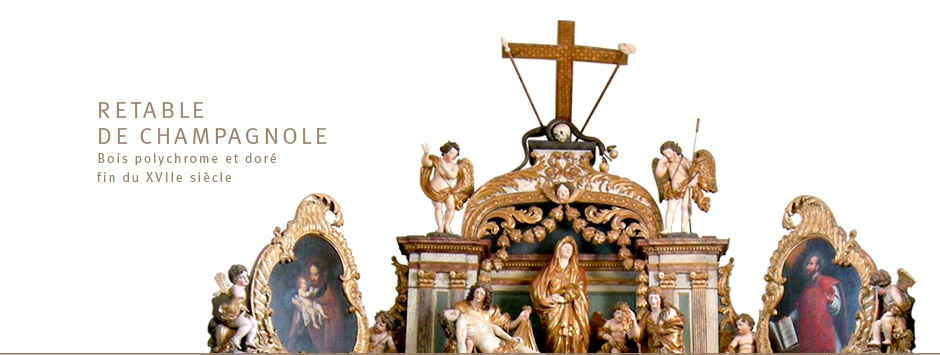
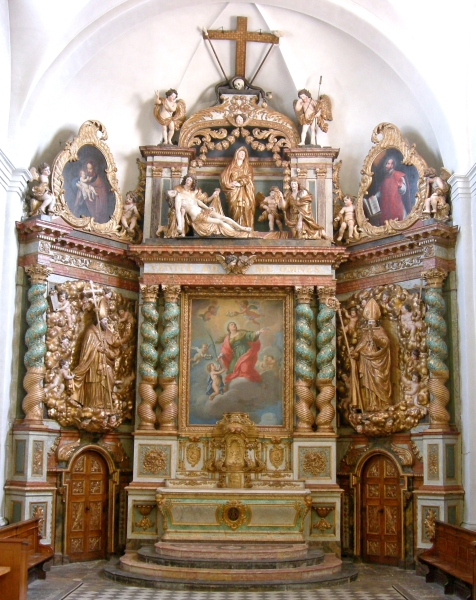
Retable of Champagnole (Jura, France)
Object: gilded and polychrome wood retable (late 17th c.)
Location: St-Cyr and Ste-Juliette de Champagnole Church, Jura (39)
Attribution: Etienne and Pierre Etienne Monnot
Project Supervisor: Champagnole Town Council
Treatment: restoration

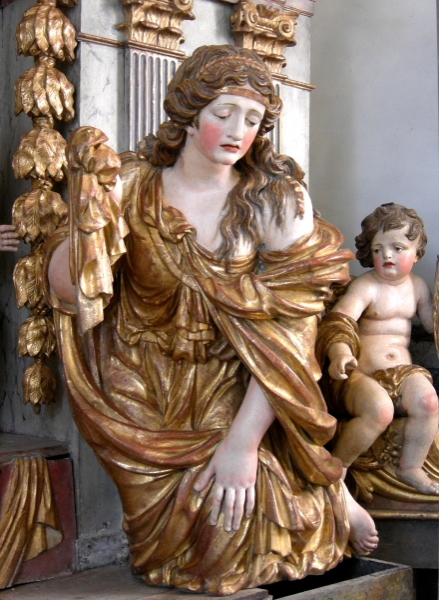
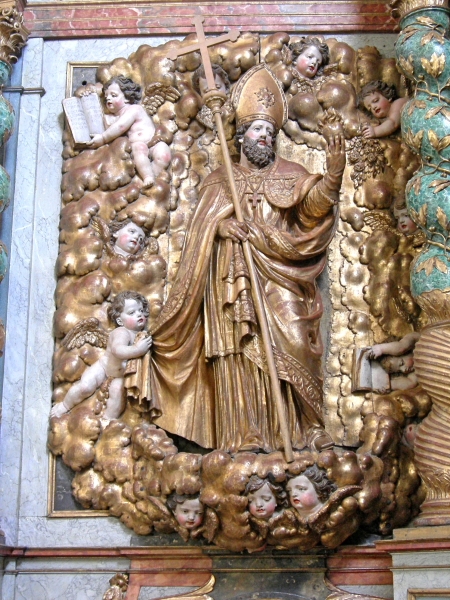
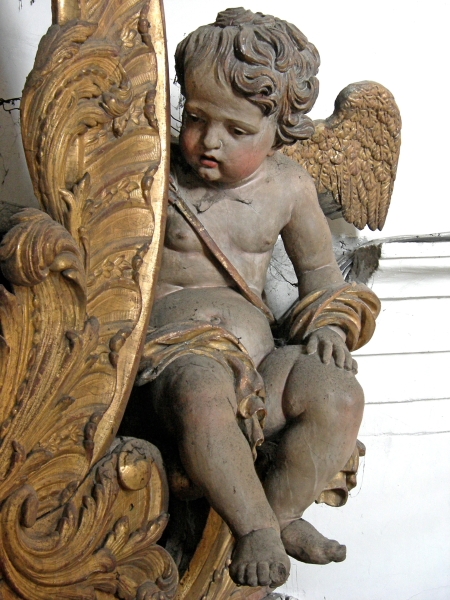
history
initiative of the Champagnole priest and put back together in the chancel by partly tearing down an altar in stucco. Two works were documented after this reassembly. The first one dealt with the cleaning and painting of the retable and the gilding of the altar (Hippolyte Dessery, painter decorator in Orleans, 1875). The second one was carried out in 1966 by sculptor Maxime Chiquet. He completed a cleaning, grime removal, an insecticidal treatment, and applied a beeswax protective product.
There is no precise document regarding the commission of this panelling that has been found in the Ursulines of Poligny's archives, kept in the local archives of the Jura, to date.
The dendrochronological examination of the sculptures of the Virgin Mary and Mary Magdalene, carried out during the restoration, determined the date of the logging of the trunks between 1685 and 1695.
The date thus allows following the trail back to the sculptor and his studio. From a stylistic point of view, the retable, with its tall twisted and partly fluted columns, refers to Rome and the baroque art of Bernini in the XVIIth century, when the Catholic Church tried to assert its supremacy over the Protestants, even through the grandeur of architectural achievements.
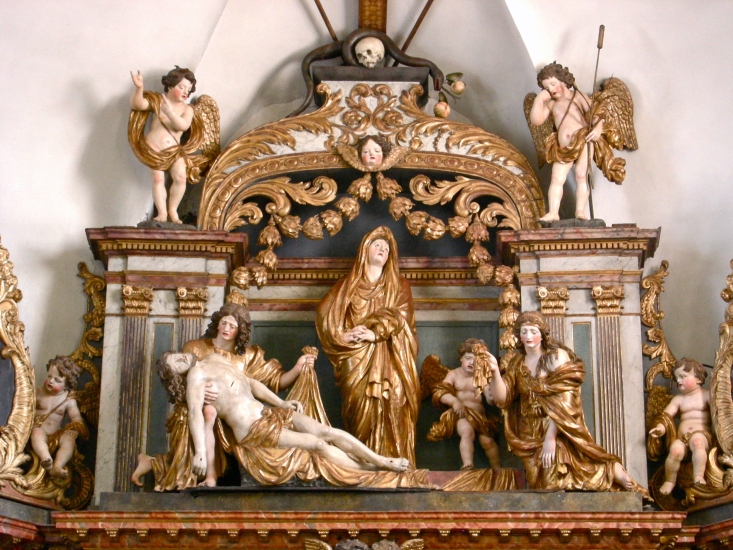
Among the French artists who went to Rome to the Royal Academy of Painting and Sculpture, sculptor Pierre Etienne Monnot from Franche-Comté, born in Orchamps-Vennes in the Doubs department, could be the artist who created the Deposition group from the retable of Champagnole.
After being educated in Dijon and Paris, he was in Poligny in the XVIIth century with his father Etienne and his studio before leaving for Rome at the end of 1686 or the beginning of 1687. In the Eternal City, he began an amazing career as a sculptor, achieving monuments in places such as the Church of Saint Ignatius of Loyola, St. Peter's Basilica in Vatican City, and the Basilica of St. John Lateran.
restoration
According to the project supervisor and in agreement with the regional department of cultural affairs of Franche-Comté (DRAC), the restoration of the retable involved maintaining the applied overpaints after the reassembly of the piece and during the different works. The retable had become very grimy due to encrusted deposits on the wax layer laid during the work in the sixties. Misshapenness in the paint layers and gilding, as well as numerous peeling and holes in the polychrome, were present on the upper part of the retable. The walnut wood body of the retable was in good general condition, even though it was loaded down by a significant amount of rubble that had fallen at its back. It also suffered from a woodworm infestation, but the distance from the chancel’s back wall, the use of oak for large sculptures, and the pictorial layer helped limit its spread.
The work carried out on the retable involved conservation operations on the paint layers through reattachment of cleavages and on the support, strengthening the wood and pest control. The cleaning was the most delicate and longest operation to restore the lustre of the gildings and the faux marble in the paint layer. The pictorial integration of losses and the occasional gilding with fine gold of missing elements in the bottom part brought back a complete view of the retable, which turned out to be an exceptional piece.