
Sculptures
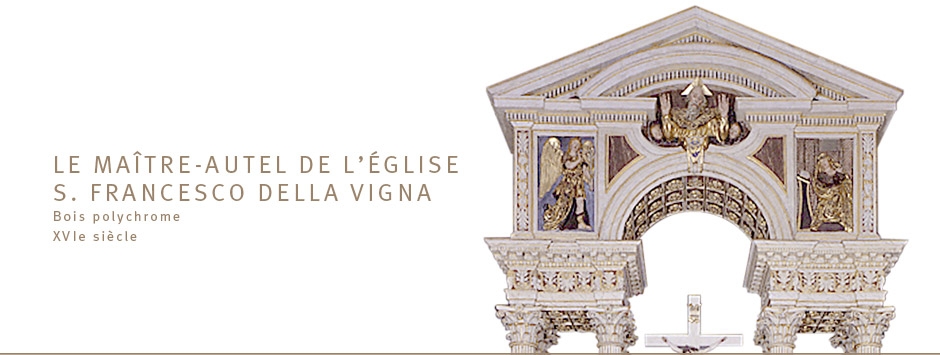
Main altar from the San Francesco della Vigna church in Venice
Object: polychrome wood retable from the main altar (16th c.)
Location: San Francesco della Vigna church, Venice
Sculptures' attribution: Gerolamo Campagna
Project supervisor: UNESCO, Ufficio di Venezia
Treatment: Restoration, 2001



history
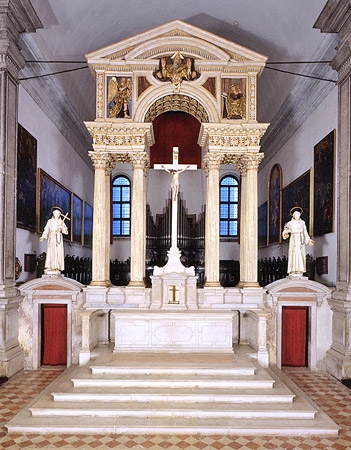
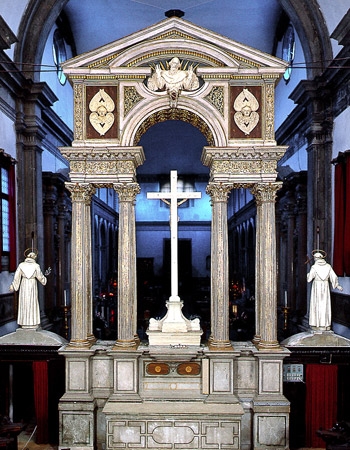
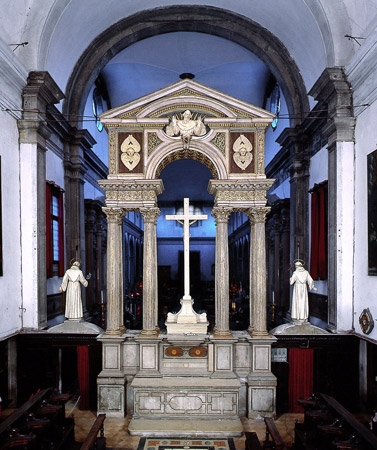
The wooden retable in the shape of a triumphal arch was built in 1569 after the removal of an older altar. The typology is similar to the monumental stonework pieces found in other Venetian churches, such as the main altar in the Santa Maria Formosa church (1592). The two wooden statues of San Francesco and Sant'Antonio (originally San Bernardino) are placed on the sides of the altar, though they were likely originally positioned between the two groups of four columns.
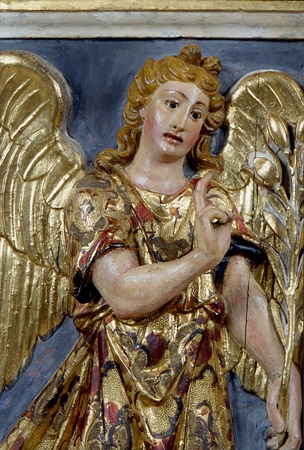
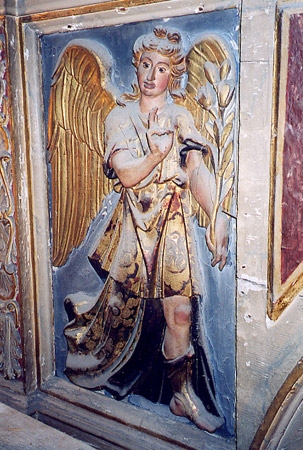
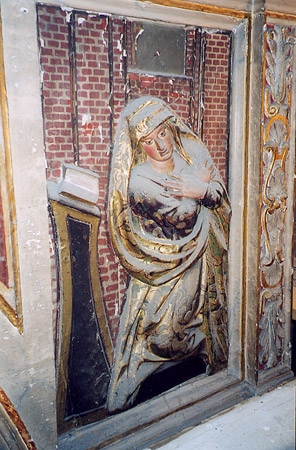
The altar may have been designed by one of the greatest architects of the time, and the sculptures and reliefs of the Eternal Father and the Annunciation are attributed to Girolamo Campagna (1549-1626). The polychromy on the back, dating back to the 17th century, imitates Istrian stone with a relief impression and simple gildings. The fake marbles on the front are from the 19th century.
restoration
A significant accumulation of grime and dirt had gathered on the retable due to a lack of proper care, partly due to its height. The condition of the polychromy was particularly concerning. The loss of adhesion between the paint layers and the wooden support had caused many deformities and losses of pictorial material. On the fake marbles, large gaps with visible preparation and exposed wood negatively impacted the overall appearance of the piece. The front polychromy, dating to 1864, required almost complete reattachment of the cleavages.
After removing the grime and debris, the reattachment of the paint layers was carried out using a thermoplastic resin diluted in water and a heat spatula to flatten the deformities. The fatty surface deposits were removed with a surfactant in aqueous solution during the process.
The elements that had moved apart from the columns and had been displaced around the central beam were reattached. The missing acanthus leaves on the capitals were recreated using cellulose pulp based on a silicone print from an original. The wood pest control was performed by applying a permethrin-based insecticide with both painting and gas-spreading methods.
Given the significant gaps, it was decided to fill the voids with pigmented putty to create neutral surfaces. The wood exposed in the gaps of gilding was cleaned, revealing fragments of the underlying gilding. The neutral-colored putties, wood, and restored elements were balanced using watercolors, while the gaps and high-reliefs were integrated using tratteggio. The polychromies and gildings were protected by applying a finishing layer tailored to the different surfaces.